Description
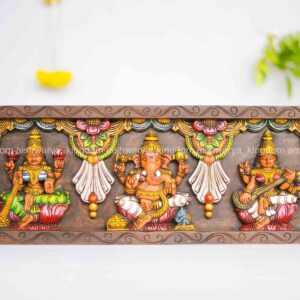
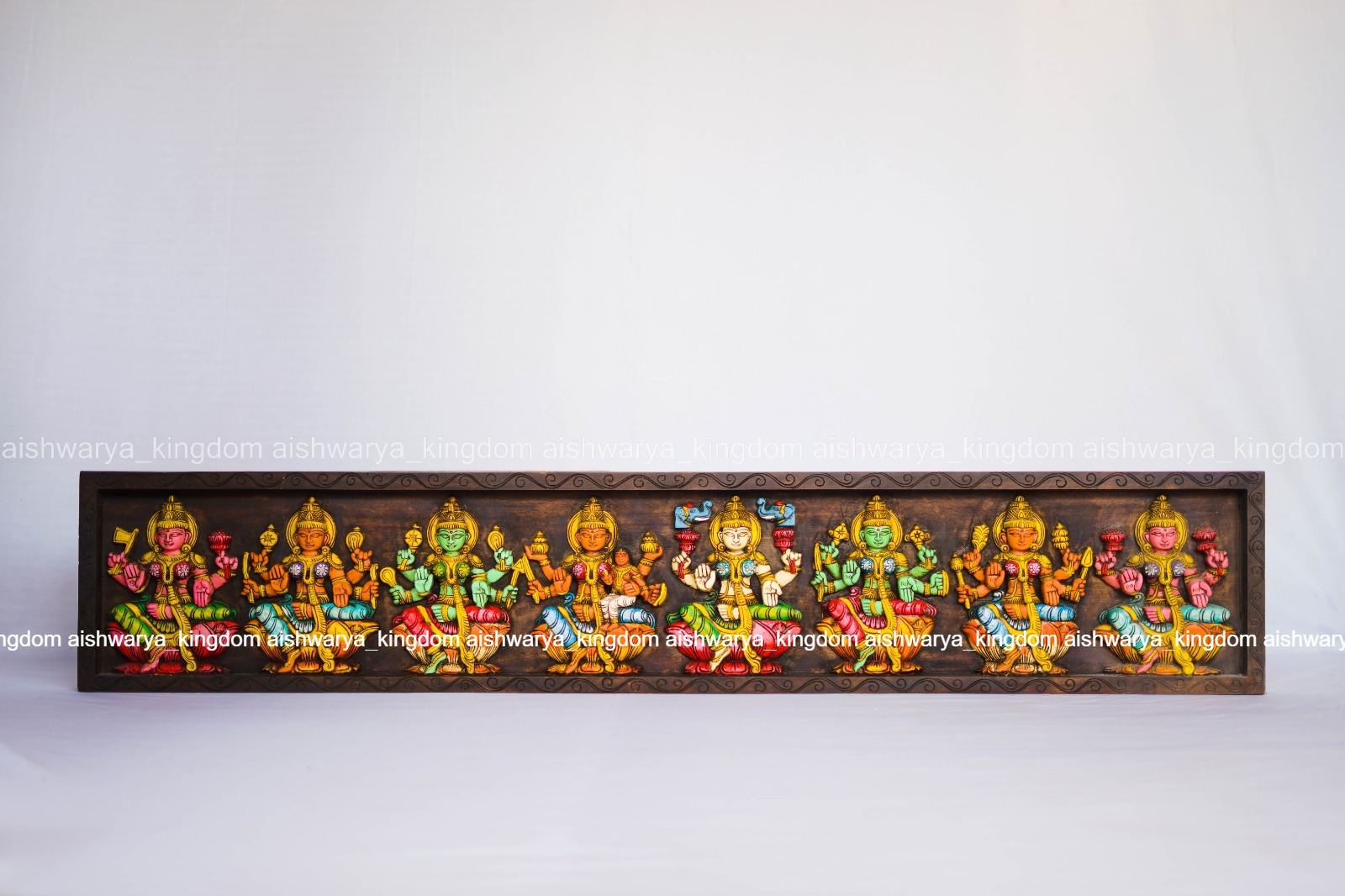
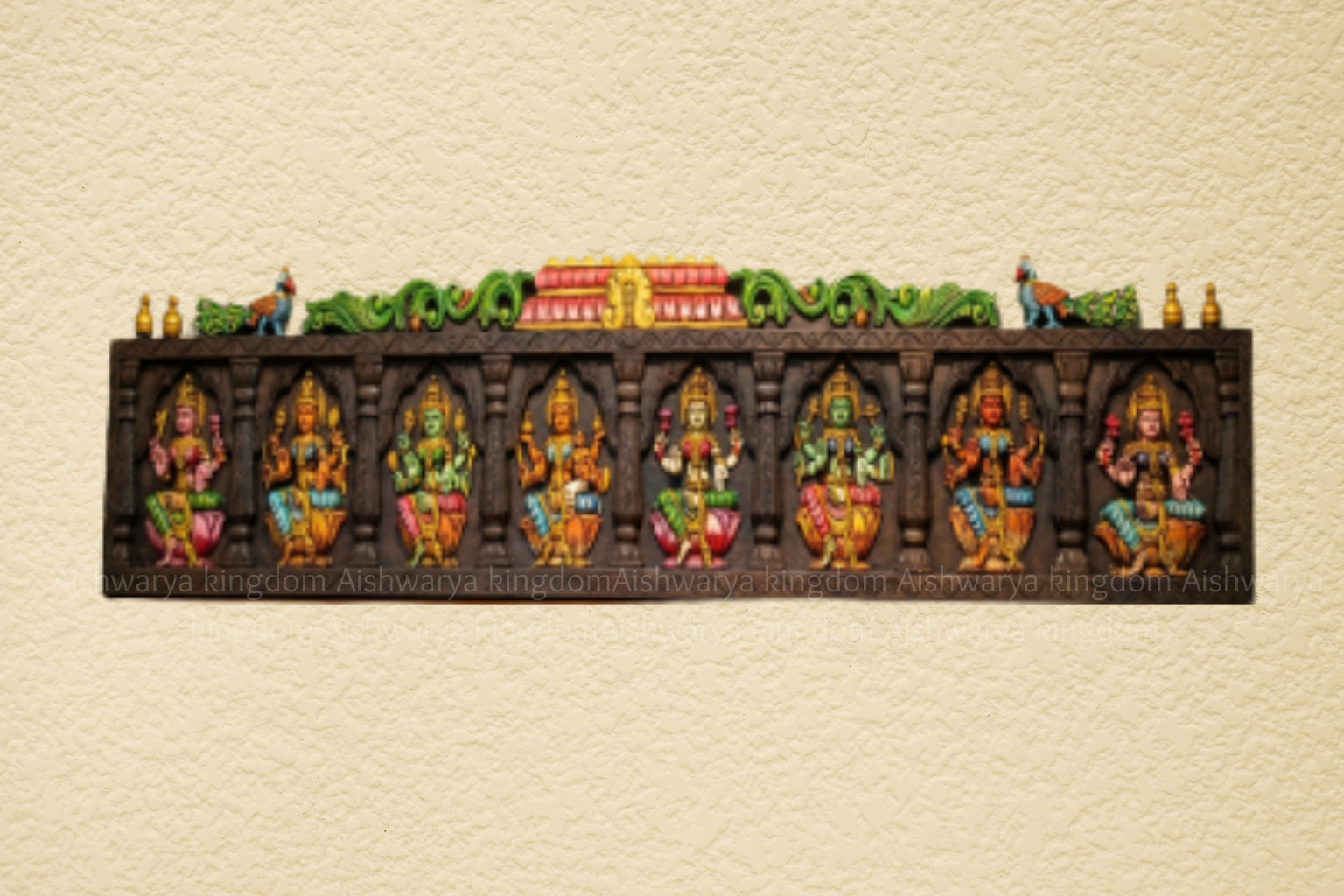
An Ashtalakshmi Horizontal Panel made from Mahogany wood would be a visually captivating and spiritually meaningful piece of art. Ashtalakshmi, the eight forms of Goddess Lakshmi, represent various aspects of wealth, prosperity, and abundance. These forms are widely revered in Hinduism and are often depicted in temple art, paintings, and sculptures. A horizontal panel would beautifully showcase the divine forms of the eight Lakshmis, arranged in a manner that captures the grace and blessings of each deity.
Design Breakdown for the Ashtalakshmi Horizontal Panel in Mahogany Wood:
1. Structure of the Panel:
- Shape and Size: The panel would be rectangular and horizontal, allowing for the eight Lakshmi forms to be depicted in a row or series of connected panels. This horizontal layout works well to allow each form of Lakshmi to be equally detailed, ensuring that all aspects of the divine goddess are represented.
- Material: Mahogany wood would provide a warm and rich base for the carvings. The wood’s natural grain, when polished, will highlight the fine details and intricate designs, creating a harmonious blend of form and function.
2. Central Theme – Ashtalakshmi:
The Ashtalakshmi panel would feature the eight distinct forms of Goddess Lakshmi, each representing a specific divine quality or blessing. These forms would be arranged in a line or two rows (depending on the panel’s size), creating a cohesive and flowing design.
Here’s a breakdown of the eight forms of Ashtalakshmi, each represented in this panel:
A. Adi Lakshmi (Primeval Lakshmi):
- Symbolism: Represents the primordial wealth and prosperity, often seen as the source of all other forms of wealth.
- Depiction: Adi Lakshmi could be shown with a halo around her, symbolizing her status as the divine source of all creation. She might be holding a lotus and coins, symbolizing wealth and purity.
B. Dhanalakshmi (Wealth Lakshmi):
- Symbolism: Represents material wealth and prosperity.
- Depiction: Dhanalakshmi would be depicted holding gold coins pouring from one hand, with a lotus flower in her other hand. A pot of treasure could be placed near her feet.
C. Dhanyalakshmi (Grain Lakshmi):
- Symbolism: Represents abundance in food and grain.
- Depiction: Dhanyalakshmi would be shown with a grain pot or sheaf of rice in her hand, symbolizing abundance in crops and agriculture.
D. Gajalakshmi (Elephant Lakshmi):
- Symbolism: Represents prosperity and the protection of wealth.
- Depiction: Gajalakshmi is usually depicted with two elephants on either side, pouring water or flowers over her, symbolizing purification and divine blessings. She might hold a lotus in one hand.
E. Santanalakshmi (Progeny Lakshmi):
- Symbolism: Represents the blessing of children and family life.
- Depiction: Santanalakshmi could be shown holding a child or standing with two children at her feet, signifying her blessings for offspring, family, and progeny.
F. Veeralakshmi (Courage Lakshmi):
- Symbolism: Represents courage, strength, and bravery.
- Depiction: Veeralakshmi may be shown riding a tiger or holding a sword, symbolizing valor and the protection of one’s family and wealth.
G. Vijaya Lakshmi (Victory Lakshmi):
- Symbolism: Represents success, victory, and triumph.
- Depiction: Vijaya Lakshmi could be depicted holding a flag or victory banner, with a crown symbolizing her association with power and success. She might be surrounded by symbols of triumph and glory.
H. Rajyalakshmi (Royalty Lakshmi):
- Symbolism: Represents sovereignty, rulership, and power.
- Depiction: Rajyalakshmi would be shown seated on a throne, wearing a crown, holding a scepter, or royal insignia, symbolizing her role as the ruler of wealth and power.


Reviews
There are no reviews yet.