

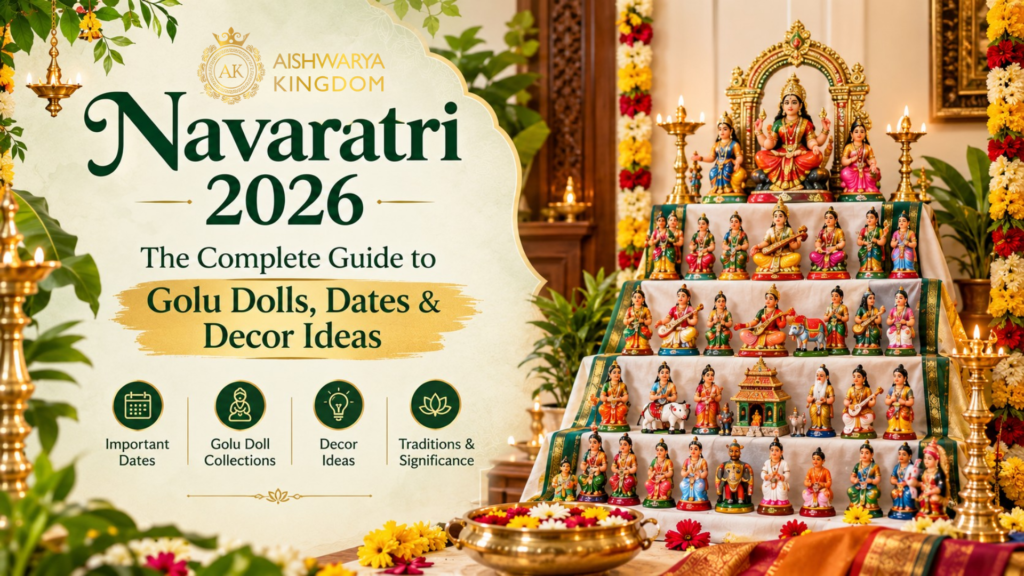
Navaratri is more than just a festival. For families across South India, it is a time when the home transforms into a living gallery of stories, devotion, and art. The heart of this transformation is the Golu, a beautiful, tiered display of dolls that celebrates the divine feminine and the richness of creation.
If you are planning your Golu for Sharad Navaratri 2026, this guide will walk you through the important dates, the meaning behind the tradition, and practical tips to create a display that is both personal and profound.
What is Golu and Why is it Celebrated?
Golu (also called Kolu or Bommai Golu) is a cherished South Indian tradition where dolls and figurines are arranged on stepped platforms during Navaratri. The practice is known by different names across regions: Bommai Golu in Tamil Nadu, Gomme Habba in Karnataka, and Bommala Koluvu (Court of Toys) in Andhra Pradesh and Telangana.
The display is more than decorative. It is a symbolic representation of the divine court of Goddess Durga. The arrangement, from gods at the top to everyday life at the bottom, reminds us that the divine pervades all of existence, from the highest heavens to the smallest details of human life.
Navaratri 2026: Important Dates
In 2026, the main Sharad Navaratri (the autumn festival) runs from October 11 to October 20. This is the celebration most closely associated with the Golu tradition.
Day 1 is October 11, 2026, with Ghatasthapana (Kalash Sthapana) and Golu opening.
Day 2 to Day 8 is from October 12 to October 18, 2026, with daily worship of the nine forms of Durga.
Day 9 is October 19, 2026, with Maha Navami.
Day 10 is October 20, 2026, with Vijayadashami or Dussehra.
The Golu is traditionally set up on the first day and remains on display for all nine nights. On Vijayadashami, one doll is symbolically put to sleep to mark the end of the festival, and the display is packed away for the next year.
How to Set Up Your Golu: A Step-by-Step Guide
Creating a beautiful Golu is simpler than it looks. Follow these steps to build a display that feels both traditional and personal.
Step 1: Build the Steps (Padi)
The foundation of your Golu is the stepped platform. Traditionally, an odd number of steps is used, such as 3, 5, 7, 9, or even 11, as odd numbers are considered auspicious.
You can use wooden planks, sturdy cardboard boxes, or a dedicated Golu stand. Drape the steps with a clean, bright cloth to create a neat backdrop that makes the dolls stand out.
Step 2: Place the Kalash
Begin by placing the Kalash (Kalasam), a water-filled pot crowned with mango leaves and a coconut, at the top center. This represents Goddess Durga and anchors the entire display.
Step 3: Arrange from Top to Bottom
The Golu follows a gentle hierarchy. Here is the traditional arrangement.
Top Step (Divinity): Place your deities here, such as Goddess Durga, Lakshmi, Saraswati, and Lord Ganesha. The Marapachi Bommai (traditional wooden bride and groom dolls) also belong to this tier.
Middle Steps (Mythology and Saints): This is where you place scenes from the Ramayana, Mahabharata, and Puranas. Saints and spiritual figures like Sai Baba, Swami Vivekananda, and Adi Shankaracharya are also placed here.
Lower Steps (Everyday Life): The lower tiers depict the richness of daily life, such as village scenes, markets, weddings, musicians, and the beloved Chettiar and Aachi (merchant and his wife) dolls.
Bottom Step (Nature): Animals, birds, and garden elements complete the display, symbolizing the natural world.
Step 4: Add One New Doll Every Year
A cherished tradition is to add at least one new doll to the Golu each year. This helps the collection grow with the family and supports the artisans who craft these beautiful figures.
Must-Have Golu Dolls for Your Collection
If you are building your collection, here are the essential dolls that bring the Golu to life.
The Marapachi Bommai
These traditional wooden dolls are the heart of the Golu. Made from red sandalwood, teak, or rosewood, a pair of male and female dolls is often given to a bride as part of her wedding trousseau, symbolizing prosperity and the start of her own Golu tradition.
The Tanjore Dancing Doll
The iconic Thalai Aati Bommai (wobble-headed doll) from Thanjavur is a Golu favorite. These dolls, with their bobbling heads and vibrant painted attire, were granted a Geographical Indication (GI) tag in 2009 for their cultural importance.
Ganesha, Lakshmi, and Saraswati
The top tier is incomplete without the divine trinity. Kozhukattai Ganesha (Ganesha with his favorite modak) brings auspicious beginnings. Goddess Lakshmi brings prosperity, and Saraswati blesses with knowledge.
Village and Everyday Life Sets
Dolls depicting the Chettiar (merchant) selling grains, musicians playing traditional instruments, and wedding scenes add depth and storytelling to your display.
Decor Ideas for a Stunning Golu Display
Lighting
Warm lighting is essential. Use small LED lights around the steps and traditional Kuthuvilakku (brass lamps) placed in front of the display. Avoid harsh lights directly in front of the dolls. Warm, soft lighting creates a festive and devotional atmosphere.
Floral Accents
Fresh flowers like marigold, jasmine, and roses can be used to decorate the steps. A beautiful rangoli in front of the Golu, with a lit lamp in the center, adds to the spiritual ambiance.
Thematic Displays
Modern Golu displays often have a theme. You could create a village scene, a temple scene, or even a contemporary theme that reflects current events. Involving children in arranging these scenes makes it a family activity and a way to pass down cultural stories.
Caring for Your Golu Dolls
Your Golu dolls are often heirlooms, passed down through generations. Here is how to care for them.
Handle with Care: Clay and paper mache dolls are delicate. Handle them gently, especially the nodding heads of the Tanjore dolls.
Store Properly: After Navaratri, wrap delicate dolls individually in soft cloth and store them in dry, dust-free boxes.
Avoid Moisture: Keep them away from direct sunlight and damp areas to prevent damage to the paint and material.
Bring Home Tradition This Navaratri
At AK Crafts, we work directly with skilled artisans to bring you authentic, handcrafted Golu dolls and decor that carry the spirit of South Indian tradition. From the beloved Marapachi Bommai to intricate paper mache sets, each piece is made with devotion and designed to become part of your family’s story.
Explore our collection and make your Navaratri 2026 Golu truly special.
Website: https://akcrafts.shop/product-category/golu-dolls/